20/10/2026 11:32
Which Channels Should Visitors Join? Telegram Shared Folders for Cambodian Craft Markets

A craft-market visitor may want opening updates, a basket maker’s catalogue and a ceramics seller’s new collections. Sending separate links can become awkward, especially when sellers distribute different versions of the market information. A Telegram shared folder offers a way to present a curated collection through one invitation. The practical question is which channels belong in that collection and what joining means for visitors. For Cambodian organizers considering social media promotion or SMM panel services, this preparation matters before spending: a larger counter cannot repair an invitation that sends shoppers into irrelevant chats. The workflow below uses a hypothetical Phnom Penh craft market to show how to build, test and maintain a useful visitor collection.
1. Decide whether a collection solves the visitor’s problem
Start with a visitor task, such as finding market updates and returning to participating makers after the event. In our hypothetical example, an organizer works with a basket workshop and a ceramics studio. Each already maintains a public channel with current product information. A shared collection could help visitors find all three destinations without asking the organizer for each address.
Use a single channel link instead when the only useful destination is the market announcement channel. Do not create extra channels merely to fill a folder. Likewise, a collection of inactive seller channels creates more searching rather than less. Write a short purpose statement before setup: this collection helps visitors find event information and the participating makers’ public catalogues. If a proposed chat does not serve that purpose, leave it out.
2. Create the folder from deliberately selected chats
Telegram’s official instructions begin at Settings > Chat Folders. Create a folder, name it and select the relevant chats. For sharing, use explicit chat selections rather than chat-type filters such as Groups or Unread. Open the folder’s sharing controls and review the chats selected for its invitation. Telegram supports different invitations containing different selections. See the official [Shareable Chat Folders guide](https://telegram.org/tour/chat-folders).
For the hypothetical market, start with the announcement channel and the two participating makers. Choose a folder name that a shopper can recognize later, rather than an internal campaign code. Maintain a small working list containing each channel’s name, public address, owner and reason for inclusion. This gives the organizer something concrete to compare with the invitation preview. It also makes a seller substitution easier to review without relying on memory.
3. Treat inclusion as an access decision
Telegram allows public groups and channels, plus eligible private ones where the creator has invitation rights. Its guide warns that folder invitations allow direct joining even where chats normally require join requests. Keep any group requiring individual approval outside the visitor collection. Private conversations and bots cannot be included in a shared folder. These details are documented in the [official folder guide](https://telegram.org/tour/chat-folders).
In the hypothetical market, the staff delivery group contains stall setup notes and supplier discussions. It has no place in the visitor invitation, even if the organizer uses it constantly. Review the contents of candidate channels as well as their names: a friendly title does not establish that the history is suitable for shoppers. Ask participating makers to confirm the intended public channel. Technical ability to include a channel is separate from whether the market should present it as a participating seller.
4. Make each included destination useful on its own
A folder cannot supply missing information inside its channels. Before promoting the collection, inspect each destination as a first-time visitor. The market channel should explain the confirmed venue, date, opening arrangements and contact route. Each maker should make its product category and enquiry route easy to identify. If a catalogue includes older products, clarify how shoppers should ask about present availability.
For Cambodian readers, agree which information needs Khmer wording and whether an additional English explanation serves the expected audience. Keep seller names recognizable across the invitation, market posts and stall signs. In the hypothetical example, the basket maker uses a workshop name online but a family nickname at the stall. Adding a consistent identifying phrase to the promotional material prevents visitors from wondering whether they found the wrong seller. Resolve that mismatch before distributing the folder.

5. Explain the invitation before people open it
Write the accompanying message around the contents and purpose of the collection. A hypothetical English version might say: “Browse the market announcement channel and the public catalogues of our participating basket and ceramics makers. Open the invitation to review the collection before joining.” Adapt the actual message to the language your visitors use, while preserving the same meaning.
Do not describe the link as merely a map, discount voucher or product photograph. That would create the wrong expectation about the action. Also avoid implying that joining reserves a product, registers attendance or confirms a workshop place. If those actions require a separate conversation, explain where to start it. Put the market’s main information somewhere accessible to people who prefer not to add a collection. The invitation should make discovery easier without becoming an unnecessary condition for basic event details.
6. Test the invitation with a consenting colleague
Ask a colleague to open the exact invitation you intend to distribute, preferably from an account that is not already involved in managing the channels. Have them compare the preview with your approved list. Check recognizable names, expected destinations and the absence of internal groups. If they agree to complete a joining test, inspect what they can actually find afterward. Do not borrow their login details or ask them to share private account screens.
Give the tester a real task: find the ceramics enquiry route, then locate the market’s arrival information. Record where they hesitate. A technically working invitation can still be confusing when several channels have similar names or outdated opening posts. Correct the information or selection and repeat only the affected check. Test the final distributed link, not a similar invitation left over from an earlier draft.
7. Distribute the collection where its purpose is clear
Place the approved invitation beside content that explains the market and its participating makers. Suitable examples include an organizer’s introductory post, a maker’s event announcement or a counter card that describes what visitors will find. Obtain the seller’s agreement before presenting their channel as part of the market collection. Avoid distributing the link into unrelated groups simply because posting is possible.
Keep a modest distribution record: placement, accompanying message, responsible person and review date. This helps when the venue changes or a seller withdraws. It is a maintenance record, not proof that a particular placement caused a sale. For the hypothetical market, the organizer might begin with its own announcement and the participating makers’ agreed posts. Review whether shoppers understand the collection before extending promotion. More placements increase the work of keeping explanations accurate.
8. Keep SMM service targets separate from folder invitations
The supplied je-smm.com catalogue includes the exact public service name “Telegram Post Views ~ From Real Account”. Its wording identifies a post-view offering, but the supplied description is empty. The name alone does not verify account quality, audience origin or delivery conditions. It also does not establish support for a shared-folder invitation. Do not submit a folder link merely because both destinations belong to Telegram.
If considering that listing, first establish the supported target format and the current service terms. Keep any service record tied to the specific eligible post. A post-view service does not demonstrate that someone added the folder, explored a maker’s catalogue or intended to buy. Purchased engagement is not evidence of genuine interest, sales, ad delivery or Cambodian users. If your objective is helping visitors discover participating makers, assess the invitation’s usefulness directly rather than assuming a panel order achieves that objective.
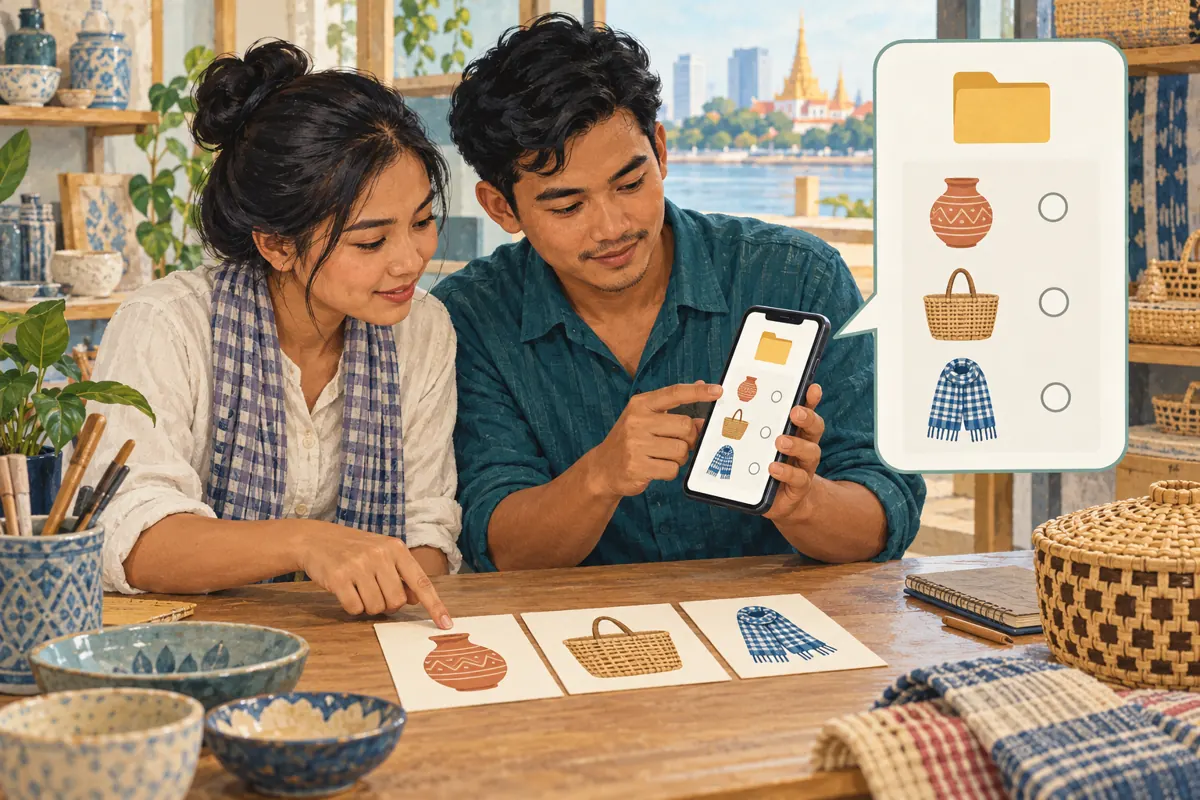
9. Review real enquiries separately from delivery records
Before promotion, decide what observations would help improve the collection. Useful examples include a visitor asking where to collect a basket, identifying a ceramic piece or reporting that the event information was difficult to find. Record the question and the resulting action with only the personal detail needed for follow-up. Keep these observations separate from service order IDs, delivery statuses and changes in visible counters.
In a hypothetical review, several visitors might ask whether the ceramics studio is attending on both market days. That suggests the attendance explanation needs attention; it does not establish how many sales the folder produced. If you ask how someone found the maker, record their answer as self-reported information. Leave the source unknown when they cannot remember. This approach produces useful editorial changes without turning uncertain attribution into a promotional success claim.
10. Assign an owner for additions and withdrawals
Telegram explains that adding chats to your own folder does not automatically distribute those additions. Updating a shared invitation can prompt its users to join newly included chats. Plan changes deliberately rather than assuming everyone’s collection stays identical. This behavior is described in Telegram’s [shared-folder announcement](https://telegram.org/blog/shareable-folders-custom-wallpapers/).
Name one organizer to maintain the approved collection and one backup who understands its purpose. When a new maker joins, check their public destination and introductory information before offering the addition. When a seller withdraws, update the relevant market announcement and review future invitations. Do not rely on folder maintenance alone to communicate an important attendance change. Keep dated notes explaining what changed, so the next organizer can distinguish a deliberate decision from an accidental omission.
11. Avoid shortcuts that make the collection harder to trust
Common mistakes include sharing an everyday work folder without reviewing its selections, adding every seller channel regardless of relevance, and calling the invitation a registration link. Another is interpreting an increase in channel members as proof that local shoppers plan to attend. These errors arise when a convenient distribution tool is expected to answer questions it cannot settle.
Use a simple decision process before each promotion: confirm that the collection still serves a clear visitor task, that every included destination is appropriate, and that the accompanying explanation matches the action. If any answer is uncertain, fix that part first. If the market has ended, decide whether the collection remains useful as a maker directory and explain that changed purpose. An accurate, maintained collection is more useful than an abandoned event invitation that continues circulating with stale promises.

Frequently asked questions
Should every participating seller be included?
Only include destinations that are useful and ready for visitors. A seller with an abandoned channel may be better represented in the organizer’s market information with an agreed contact route. Explain your inclusion criteria consistently so the folder remains a useful directory rather than an implied ranking of the makers.
Can a shared-folder invitation replace approval for a private seller group?
Do not use it when individual approval is essential. Telegram’s official guide says folder invitations can allow direct joining of chats that normally require join requests. Keep that group outside the public collection and maintain its separate admission process.
Does revoking a folder invitation remove people who already joined?
Telegram’s technical documentation describes revocation as preventing new users from importing through that link. Do not treat it as removing existing members or undoing access already granted. If an internal group was included accidentally, review that group’s membership and permissions separately. See the official [folder documentation](https://core.telegram.org/api/folders).
What if a visitor wants only one maker’s channel?
Provide the maker’s direct public channel address in your accompanying information when appropriate. Visitors should not need to adopt the whole collection to find one seller. A clearly described direct route also helps people who prefer to keep their own chat organization.
Can panel views show that the folder brought Cambodian customers?
No. A delivered view count does not establish location, folder adoption or purchasing intent. Evaluate actual enquiries and confirmed transactions separately, and retain uncertainty about their source. Use questions from visitors to improve the collection even when you cannot attribute those questions to a particular promotional placement.
Explore the current service catalogue, create an account, or ask a specific question through support tickets.
- Telegram: Shareable Chat Folders
- Telegram: Shareable Chat Folders, Custom Wallpapers and More
- Telegram API: Dialog folders
Prepared with AI assistance. Illustrations explain the workflow and do not represent customer results.