19/10/2026 16:28
What Should the First Reply Ask? Telegram Greetings for Cambodian Curtain-Cleaning Shops
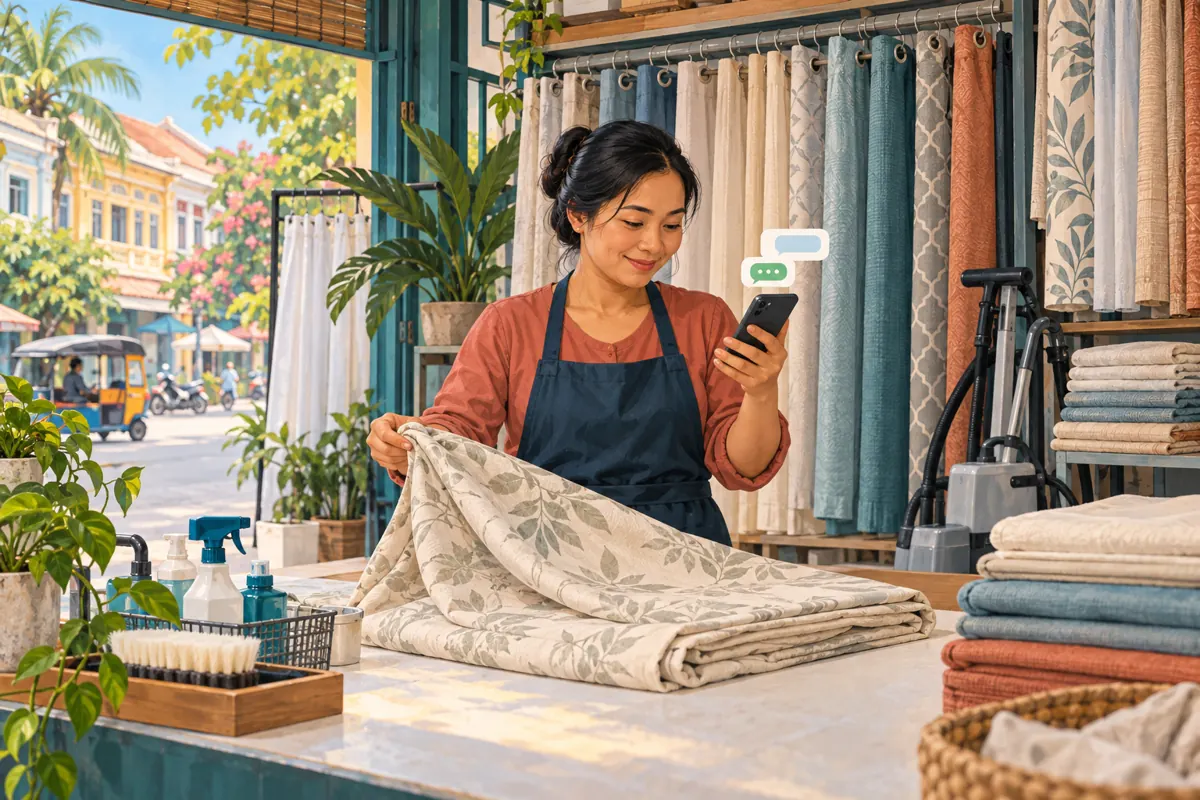
A curtain-cleaning demonstration can attract a simple Telegram message: “How much?” The shop still needs enough context to answer responsibly, while the customer may not know which details matter. A useful automatic greeting makes that next step easier. For a Cambodian business promoting its work through social posts, the first reply should help someone describe the job without implying that a price, collection or cleaning result is already confirmed. This workflow explains how to prepare that greeting, test its behaviour and hand the conversation to a person. It also shows why buying panel activity cannot solve an unclear enquiry process.
1. Give the greeting one practical job
Start with the decision your staff need to make next. For a curtain-cleaning shop, that might be whether the enquiry concerns loose curtains brought to the shop or curtains that require collection and removal. Those situations can require different questions. The greeting does not need to explain every service condition. Its job is to obtain enough information for a staff member to choose the appropriate follow-up.
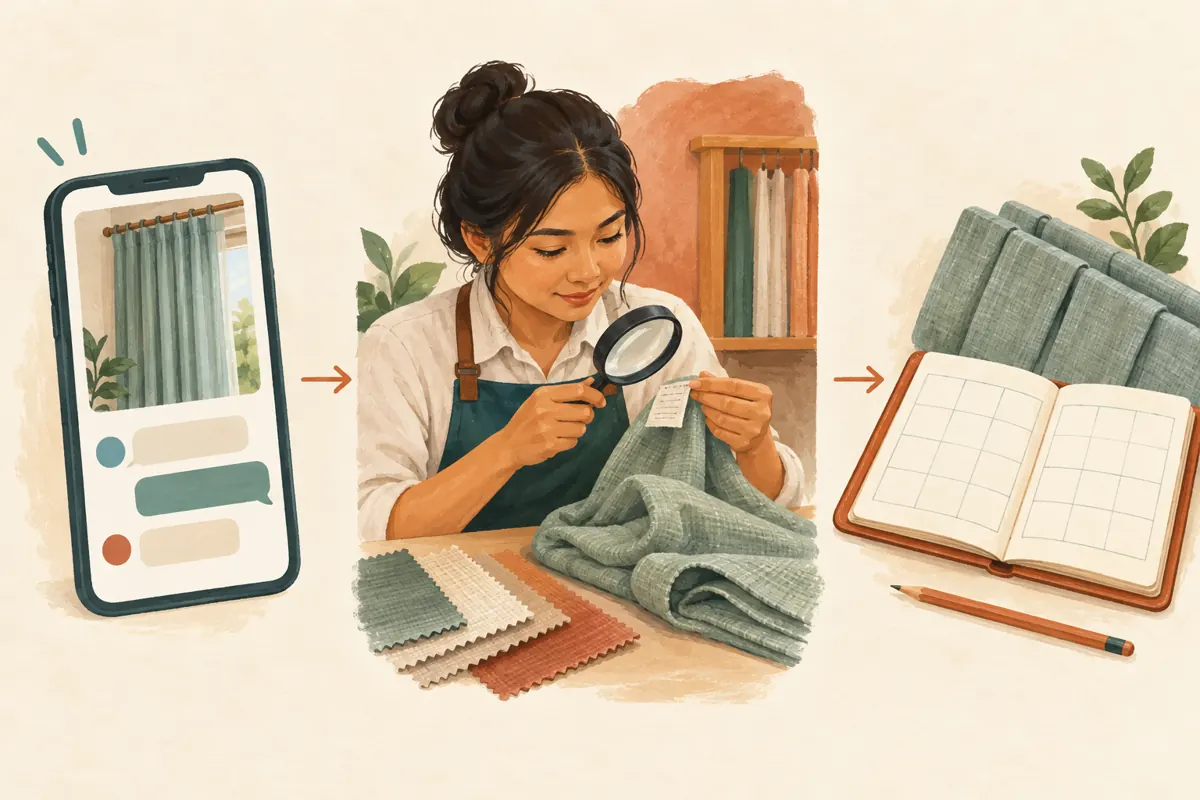
Consider a hypothetical Phnom Penh shop posting a short demonstration of curtain inspection. Its caption invites viewers to message about cleaning. If the automatic reply immediately sends a long price list, customers may select an option before anyone understands their fabric or access requirements. A better opening asks for a curtain photo, a general area and whether the curtains are still hanging. Staff can then ask relevant questions instead of repeating a generic sales pitch.
2. Understand the trigger before writing the message
Telegram documents Business greetings as automatic messages for people contacting an account privately for the first time, or after a configured period of inactivity. This matters because a returning customer can encounter the greeting again. Write something that still makes sense to someone who has used your service before. “Thanks for contacting our curtain-cleaning team” is more suitable than a claim that every recipient is a new customer.
Find Telegram Business in Settings and check the greeting feature and access requirements shown in your account. Telegram’s introductory announcement described Business features as included for Premium subscribers; verify the current offer before purchasing access. A start page appears before a conversation begins, while an away message addresses absence. Keep the greeting focused on enquiry intake. These distinctions are documented in Telegram’s official Business introduction and greeting reference, listed in the sources.
3. Ask for details customers can provide easily
Choose a small set of requests that customers can answer without specialist knowledge. A general photo can show the curtain arrangement. An approximate quantity helps staff understand the scope. A district or nearby landmark can support an initial service-area check. Avoid making the first reply depend on exact fabric composition, technical measurements or a full residential address. Those details may become relevant later, but asking for everything immediately creates unnecessary work.
Explain what a useful photo should show: the curtain itself, with enough surrounding context to understand whether it remains installed. Ask customers to avoid including people, documents or private household details. If a care label is available, staff can request a separate close-up when needed. Make room for uncertainty: a customer who cannot identify the fabric should still be able to continue. Staff review, and sometimes inspection, remains necessary before making commitments.
4. Draft an honest greeting with a clear next step
A hypothetical English draft is: “Thanks for messaging our curtain-cleaning team. This is an automatic welcome. To help us review your enquiry, please send a curtain photo, your general area and whether the curtains are hanging or already removed. If you know the number of panels, include that too. Our team will review the details before confirming a quote or collection. If you have already sent this information, there is no need to repeat it.”
Adapt that draft to the language your customers actually use. For a mainly Khmer-speaking customer base, have a fluent staff member write and check the customer-facing version. If the shop regularly serves English-speaking customers too, keep any bilingual message short enough to scan. Avoid adding an exact reply deadline unless staff can support it. Remove claims such as “all stains removed” or “collection confirmed”: the greeting has not assessed the job or checked availability.

5. Choose recipients and repeat timing deliberately
Telegram’s recipient controls distinguish categories such as new chats, existing chats, contacts and non-contacts, with options involving selected users and exclusions. Review the actual selection carefully. Excluding all saved contacts may remove existing customers from the intended audience, while including everyone may send shop instructions to suppliers or relatives. The official recipient reference explains these categories; your configuration should reflect how the business uses its account.
Choose the inactivity setting with returning customers in mind. Telegram’s greeting reference currently lists 7, 14, 21 and 28 days as supported inactivity values. Select an available interval that suits your enquiry cycle, then record the choice. For the hypothetical curtain shop, a longer interval might reduce repetitive introductions during a slowly developing enquiry. That is an operational judgement, not a platform recommendation. The message should remain harmless if it appears during a conversation about an existing job.
6. Test the customer experience before promoting it
Use a consenting colleague’s separate account to test a first enquiry that matches the recipient rules. Send a short question, then inspect the reply on the receiving phone. Check that the greeting arrives, the shop identity is clear and the requested information fits comfortably on the screen. Next, test an excluded recipient where practical. Record the account category and observed result so a successful test does not become an unsupported assumption about every customer.
Also test a message that already contains the requested details. The automatic reply should not make that customer feel obliged to start again. If an away message is enabled, inspect the combined experience during its configured period and remove contradictory wording. Do not assume deleting a conversation reproduces the inactivity trigger. Test a returning conversation when it genuinely meets the selected conditions. If a result is unexpected, review the settings before sending more promotional traffic to the inbox.
7. Make the human reply visibly useful
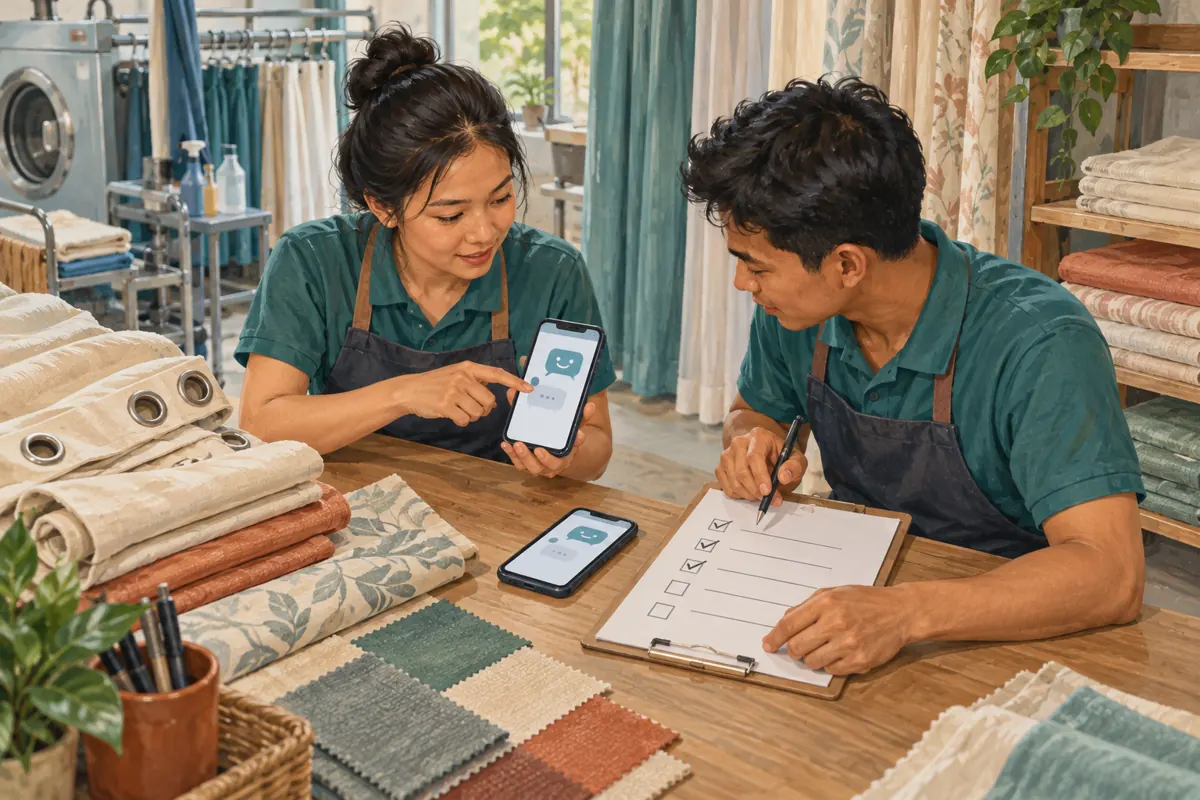
Assign someone to review incoming enquiries during the shop’s actual working routine. When they open a chat, they should read what the customer has already supplied before asking another question. A hypothetical follow-up could say: “Thank you. I can see the curtains are still installed. Do you need our team to remove them, or will you bring them to the shop?” This acknowledges the information and moves the discussion toward a relevant decision.
Keep enquiry, assessment and confirmed appointment as separate stages in your working notes. A photo is not an accepted quote, and a preferred collection day is not a reservation. Before confirming arrangements, the staff member should check the service scope, applicable price, location and available time with the customer. If someone writes about a complaint or an existing collection, respond to that issue directly instead of treating them as a fresh sales lead.
8. Connect promotion to the task the inbox can handle
Build the promotional post around a question the greeting can help answer. For example, the hypothetical shop could show the difference between curtains already removed and curtains still on a rail, then invite viewers to explain which situation applies. Use genuine business footage with permission where necessary. The post and greeting should agree about the next step: requesting a review, rather than obtaining an instant confirmed cleaning price.
Before increasing promotion, walk through the journey from the published post to the intended private conversation. Check that staff can recognise which service is being discussed without asking the customer to repeat the whole post. If enquiries regularly concern a different service, revise the invitation or broaden the greeting carefully. Avoid placing temporary discounts in an automatic message unless someone owns their removal. A forgotten offer can outlive the campaign that introduced it.
9. Decide whether an SMM service addresses the problem
The supplied je-smm.com catalogue includes the exact title “Telegram - Premium Bot Start - 90D Premium Expiry”. Its description is empty. The title identifies a bot-start offering, but it does not establish how delivery works or provide evidence about customer intent. A Telegram Business greeting in a shop’s private conversation is a different task. Do not assume a bot-start service configures that greeting, tests its recipient rules or produces curtain-cleaning enquiries.
If the business objective is more suitable local enquiries, first ask what a proposed service actually changes and how that relates to the objective. Seek clarification where the description is missing, and check applicable platform rules before considering a purchase. Purchased engagement is not evidence of genuine interest, sales, ad delivery or Cambodian users. Keep any panel delivery record separate from customer conversations and bookings. When the service does not address the identified problem, skipping the order is a sensible decision.
10. Review confusion and correct the smallest useful thing
After using the greeting with real enquiries, review recurring points of confusion without copying private customer material into a public report. Are people unsure what counts as a curtain panel? Do they send an exact home address when a district would suffice? Do they believe the greeting confirms collection? Each pattern suggests a specific wording change. Replace an unclear term, narrow a request or state the confirmation step more plainly.
Common mistakes include sending a catalogue before answering the question, demanding information already supplied, excluding customers because they are saved contacts and allowing an outdated offer to remain in the greeting. Change one meaningful element at a time and note when it changed. Compare the clarity of subsequent conversations while acknowledging differences in enquiries and promotion. A quieter inbox alone does not demonstrate improvement; the useful question is whether customers and staff understand the next step.
Frequently asked questions
Can the greeting quote a cleaning price automatically?
A preset greeting can contain price information you choose to write, but that does not mean it has assessed the curtains. If you include a published price, explain its scope and conditions clearly. For jobs needing inspection, use the greeting to collect initial context and let staff confirm the applicable quote.
What if the customer sends only a voice message?
Have a staff member listen and identify which details are already present. Reply with the missing question instead of demanding the full greeting checklist again. If a photo is needed, explain why it helps. Do not assume a preset greeting understands or extracts information from the voice message.
Should the greeting ask for a deposit?
For this workflow, keep payment requests out of the initial automatic welcome. First establish the job and confirm the terms through a human reply. If the shop requires a deposit later, communicate the amount, purpose and agreed arrangements clearly within its normal booking process.
What if Telegram Business greetings are unavailable on our account?
Check the current app and account requirements shown by Telegram. Meanwhile, use the approved wording as a manually sent first reply, adapting it to information already received. The enquiry process can still work without automation; staff must simply take responsibility for sending the welcome themselves.
How can we tell whether the greeting helps?
Review whether customers supply useful initial details and whether staff need fewer repetitive clarifications. Also look for misunderstandings about quotes or collection. Keep a small record of wording changes and observed problems. Do not attribute bookings to the greeting alone when the promotional content, offer or staffing also changed.
Explore the current service catalogue, create an account, or ask a specific question through support tickets.
- Telegram: Introducing Telegram Business
- Telegram: Business greeting message trigger and inactivity settings
- Telegram: Business message recipient categories
Prepared with AI assistance. Illustrations explain the workflow and do not represent customer results.