20/10/2026 22:08
Can New Learners See the Preparation Guide? Telegram Chat History for Cambodian Sewing Classes
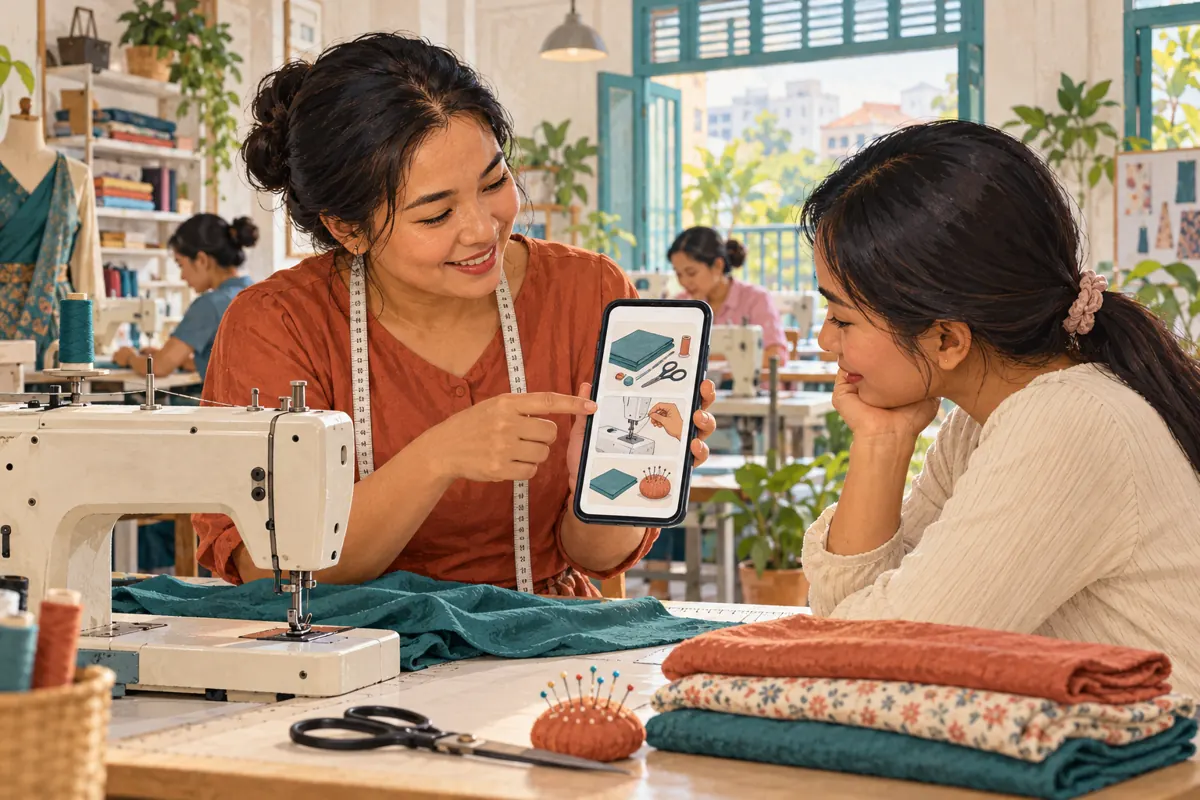
A new learner joins your sewing workshop’s Telegram group after seeing a promotional post. You ask them to bring the fabric shown in an earlier message, but they cannot find that message. Meanwhile, an older conversation contains a previous learner’s measurements and payment screenshot. Making every old message available would solve one problem while creating another. For Cambodian workshops promoting beginner classes, the useful question is therefore specific: which earlier materials should newcomers receive, and can they actually open them? This workflow connects Telegram history settings, a carefully prepared starter pack and honest promotion without treating a growing member count as proof of enrolment.
1. Define what a newcomer must know before attending
Start with the learner’s first practical decision. For a beginner sewing session, that might be whether to bring fabric, whether machines are supplied and how to confirm a place. Write those requirements before inspecting the chat settings. An accessible archive is helpful only when it contains information that answers the current class’s questions. A long conversation can still leave someone unsure which instructions apply.
Consider a hypothetical Phnom Penh workshop offering an introductory tote-bag class. Its preparation guide shows suitable fabric, explains which tools the workshop supplies and identifies the person handling bookings. The owner should be able to point a newcomer to those materials without asking them to reconstruct last month’s discussion. Keep attendance confirmation separate: receiving a guide or joining a group does not establish that a seat has been reserved.
2. Understand the history control before changing it
Telegram’s FAQ describes a persistent-history control that determines whether new group members can access earlier messages. It also explains that public groups expose their history to anyone viewing them. These are different audience decisions. A workshop should first decide who belongs in the learning space, then decide what earlier material that audience should receive. Telegram’s official FAQ is the supporting reference listed in the sources.
Do not assume every group offers the same switch. Telegram’s technical documentation identifies restrictions involving public groups and groups with forum topics, and requires administrator authority for the history-changing operation. That explains why instructions copied from another group may not match your screen. If the control is missing, check the group’s configuration with its owner. Avoid changing the group’s public status or removing topics simply to make a familiar menu appear.
3. Review the archive as if a stranger were reading it
Before expanding access, inspect the material newcomers could encounter. Separate reusable teaching instructions from personal exchanges, outdated offers and temporary arrangements. A photograph of a practice seam may belong in a shared learning library. A learner’s body measurements, home address, private fitting photograph or payment receipt requires a different decision. Participation in a previous class is not permission to reuse someone’s details in future promotion.
Look beyond obviously sensitive attachments. An ordinary reply can reveal that someone received an exception, a special price or an individual accommodation. An old timetable may look current when separated from the surrounding conversation. If the archive mixes useful lessons with material that should remain within the original cohort, do not open it wholesale. Prepare fresh teaching copies that retain the explanation while excluding names, transactions and irrelevant conversation.
4. Choose between a reusable archive and a fresh starter pack
Use accessible history when the group was deliberately built as an ongoing learning resource and its older material remains appropriate for incoming members. A standing sewing-help community may benefit from previous explanations of fabric handling or tool preparation. Assign someone to review that material periodically so newcomers do not mistake a superseded instruction for the current workshop requirement.
Prefer a fresh starter pack when each intake has different arrangements or the existing conversation is heavily personal. In a hypothetical Battambang workshop, one class uses supplied fabric while the next asks learners to bring their own. Sharing the whole previous discussion could create unnecessary purchases. A newly written pack can state exactly what the next intake needs. You can also maintain a separate, reviewed teaching resource while keeping cohort conversations distinct; choose the structure your staff can realistically maintain.

5. Make the change deliberately and record the result
Have the group owner or an appropriately authorized administrator open the group information and inspect its editing or management controls. Look for the setting describing chat history for new members. Read the choices presented in your app, select the intended option where available and save. Menu wording can vary, so use the purpose of the control as your guide rather than treating a remembered sequence of taps as universal.
Record the group, the date, the person making the change and the intended audience. Add a short reason, such as making reviewed preparation materials available to future learners. This note helps another instructor understand what was decided. Do not write that all previous members now have complete historical access unless you have actually checked their situation. A saved setting is a configuration result; access to a particular message still deserves a practical test.
6. Test with a consenting newcomer, not only an administrator
Ask a consenting colleague who has not previously belonged to the group to join through the route intended for learners. Give them a realistic task: find the fabric guide, open its attachment and identify what they should bring. Avoid coaching them through every tap. The test should reveal whether the preparation route works for someone without the owner’s knowledge or existing chat history.
Check older members separately if someone already reports missing material. Do not remove and re-add learners as an improvised troubleshooting method. Instead, ask which exact item is unavailable and whether a newly posted copy opens. Record the device and app version only when they help investigate the issue. The useful result is a concrete observation—such as the guide opening successfully—not a general assumption that everybody can now see everything.
7. Build a starter pack that stands on its own
Give the pack a clear class name and an explicit date or intake label. Explain what to bring, what is provided, where the class takes place and how to resolve a preparation question. For Cambodian learners, use the language they understand comfortably, with photographs supporting unfamiliar sewing terms. If the workshop teaches in Khmer, a concise Khmer guide is more useful than an English message copied from a supplier.
Make each instruction complete without an earlier reply. Replace wording such as bring the same fabric as above with a direct description and a relevant image. Check that any illustrated tools match the actual class arrangements. When someone cannot access the historical guide, send or post a reviewed current copy after they have joined. Confirm that it opens before referring them onward. Keep personal booking details out of the group-wide preparation pack.

8. Connect promotion to the tested learning experience
Write promotional copy around what joining genuinely provides. A hypothetical offer could invite interested learners to receive the current preparation guide and ask about the next beginner session. Avoid promising a complete lesson archive when you have checked only the starter pack. If the group is for confirmed learners, make the booking step clear before distributing its invitation; an enquiry route and a class discussion space serve different purposes.
Choose a modest promotional image showing the class activity or materials with permission. Do not portray private student exchanges as public recommendations. Before sharing the invitation more widely, have an instructor follow the entire route from the promotional message to the preparation instructions. This catches a common operational gap: the promotion describes a helpful resource, but the receiving group still expects newcomers to ask where everything is.
9. Keep SMM panel activity separate from learner access
The supplied je-smm.com catalogue includes the exact service name Telegram - Channel/Group Members ~ Max 1M ~ 𝐍𝐎 𝗥𝗘𝗙𝗜𝗟𝗟 ~ 50k/days ~ INSTANT. Its category identifies bot-account members, and no further description is supplied. The listing concerns membership; it does not establish classroom attendance, Cambodian audience origin, genuine interest or access to your preparation materials. Treat the numbers and timing words in its title as catalogue wording, not independently verified performance.
For a sewing-class group, purchased membership is not a useful substitute for the newcomer test. It cannot show whether a learner understood the fabric requirement or booked a place. A sensible decision may be to skip that service and spend the effort improving the guide and answering genuine enquiries. If panel activity already exists, record it separately from confirmed bookings and attendance. Never present an inflated group total as evidence that local students trust or recommend the workshop.
10. Fix the recurring mistakes and review the next intake
The most common mistake is testing from the owner’s account, where the desired message is already familiar. Other mistakes include making a group public just to expose old posts, forwarding an entire personal conversation when one cleaned-up instruction would suffice, and retaining conflicting preparation lists without identifying the current one. Another is assuming that an invitation accepted means the person has read or understood the guide.
After the next intake, note the questions that still caused confusion. Did learners ask where to find the pack, whether fabric was supplied or whether joining reserved a seat? Revise the specific instruction responsible. Keep any counts tied to their actual meaning: a confirmed booking is a booking, an attendance record is attendance, and a group member is simply a member. Use those distinctions when deciding whether promotion needs improvement or the onboarding instructions need another edit.

Frequently asked questions
Should every sewing-class group make earlier messages visible?
No. Decide according to the archive’s contents and the group’s purpose. A reviewed teaching library can help incoming learners, while a previous cohort’s discussion may contain private details and obsolete arrangements. If reviewing the whole archive is impractical, prepare a clean current starter pack instead of treating unrestricted history as the default.
Why can the owner see a guide that a new learner cannot?
The owner’s view does not establish the newcomer’s access. Check the group’s history configuration and ask which exact message or attachment is missing. Test through a consenting new member’s account. If access remains unclear, share a reviewed current copy and confirm it opens rather than repeatedly sending the same inaccessible reference.
What if the chat-history setting is absent?
Ask the owner to inspect the group type, topics configuration and your administrative authority. Telegram documents restrictions affecting the history-changing operation. Do not change unrelated settings just to expose the control. A current preparation pack can address the immediate learning need while you investigate the configuration.
Can we reuse an earlier learner’s question in the new guide?
You can write a general explanation of the underlying teaching issue without reproducing the person’s identity or private circumstances. For example, explain how learners should choose practice fabric using a fresh example. Obtain appropriate permission before reusing identifiable photographs, screenshots or attributed comments.
Will buying group members help us check whether the guide works?
No. Purchased membership does not demonstrate comprehension, local demand or attendance. Test with a consenting person who can describe what they found and what remains unclear. Evaluate the workshop using genuine enquiries and confirmed participation, and keep any purchased activity explicitly separate from those records.
Explore the current service catalogue, create an account, or ask a specific question through support tickets.
- Telegram FAQ — Groups, public history and persistent history for new members
- Telegram API — History visibility operation and group configuration restrictions
Prepared with AI assistance. Illustrations explain the workflow and do not represent customer results.