21/10/2026 16:00
Pens Included or Sold Separately? Telegram Offer Corrections for Cambodian Stationery Shops
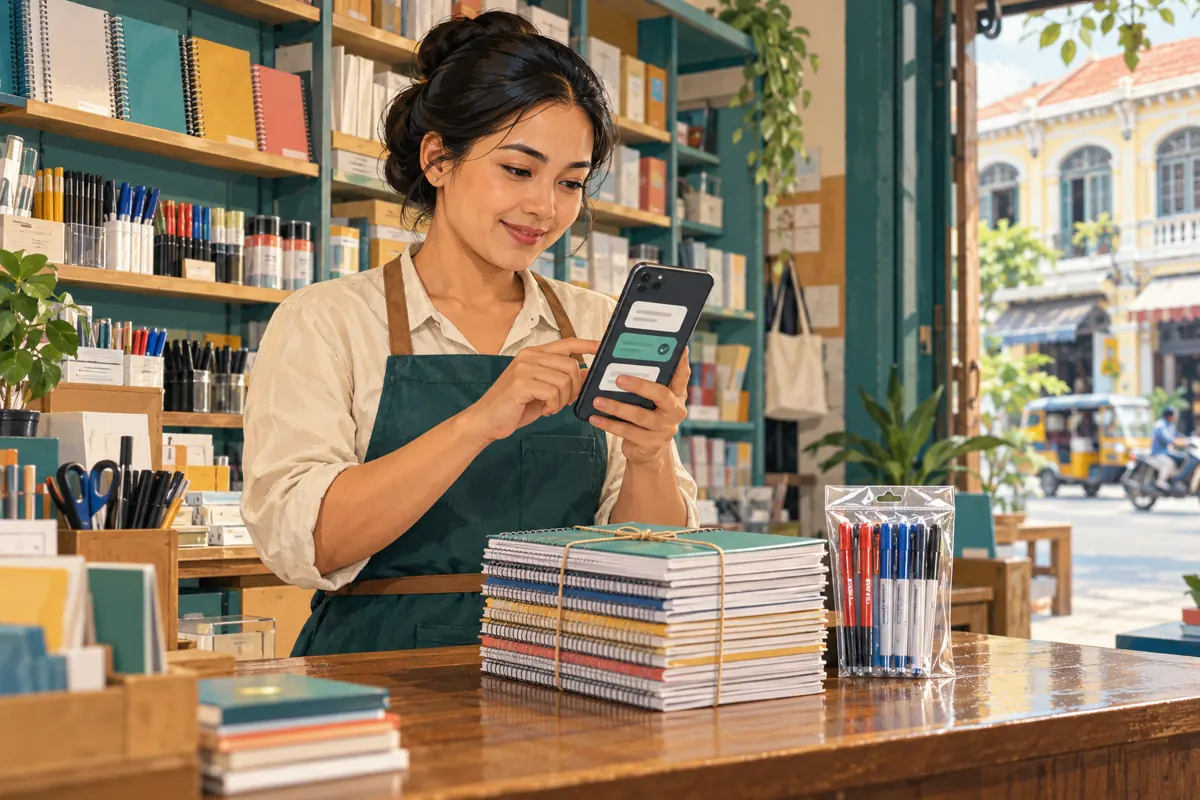
A stationery offer can become misleading through one missing sentence. A photograph shows notebooks beside pens, the caption calls everything a school bundle, and readers reasonably assume both are included. Correcting the caption helps future visitors, but customers who already asked for delivery may still be relying on the earlier version. For a Cambodian shop promoting through Telegram, the practical question is how to correct the offer without leaving two different expectations in circulation. This guide uses a hypothetical notebook promotion to explain when to edit, when to publish a separate correction, and when to contact an existing buyer directly. It also explains how to handle an associated SMM panel record without treating purchased views as evidence that anyone understood the correction.
1. Establish what the shop actually offered
Start at the counter, before opening the message editor. Put the advertised notebook bundle beside the stock that will actually be packed. Confirm notebook quantity, size, ruling, cover options and whether pens belong to the bundle. Check the approved selling terms with the person responsible for the offer. A polished correction is useless if the team is still guessing what customers should receive.
In this hypothetical example, a Phnom Penh stationery shop photographs a notebook bundle with a pen pack beside it. The intended offer covers notebooks only, but the caption says school set without defining the contents. This is a material ambiguity because it changes what a buyer expects to collect. Record the original wording and the approved clarification before changing anything, so staff can explain the difference consistently.
2. Choose between a typo fix, a correction and a new offer
Use a simple decision rule: would the change affect a reasonable buying decision? A punctuation repair usually needs only an edit. A change to included items, collection arrangements, availability or a quoted amount needs an explicit explanation. If the post now describes a different product altogether, prepare a new offer instead of rewriting the old promotion into something unrelated.
For the hypothetical notebook bundle, edit the ambiguous caption and publish a short correction because the contents were unclear. If the shop later introduces a backpack package, give that package its own post. Reusing the notebook post for a backpack would make earlier conversations difficult to interpret. Keep the correction proportionate: explain the changed detail clearly without surrounding it with another sales pitch.
3. Understand what Telegram's edit marker tells readers
Telegram documents editing sent text through the message menu: on mobile, press and hold the message and choose Edit. Its guidance also describes an edited label. Check the actual message and the controls available to your authorised account before relying on this route. Source: https://telegram.org/blog/edit
Telegram also documents a last-edit timestamp. When a message has been changed more than once, that timestamp reflects the most recent edit. It does not explain which commercial detail changed or provide your customer with the shop's own revision record. Source: https://telegram.org/blog/dynamic-video-quality-and-more
Treat the marker as supporting context. A reader should understand the current bundle without interpreting a timestamp or remembering an earlier caption. Keep a separate internal note of the original ambiguity, the corrected wording and the reason for the correction.
4. Write a correction that answers the buying question
Place the corrected contents near the beginning of the caption. In the hypothetical example, useful wording would be: “Notebook bundle only. The pen pack shown beside it is sold separately. Correction: our earlier caption did not make this clear.” This identifies the product, resolves the ambiguity and acknowledges the problem without blaming the reader.
A separate correction post should identify the earlier offer, explain the change and tell affected customers what to do. For example: “Clarification for our notebook-bundle post: pens are not included. If you already requested this bundle expecting pens, please reply in your existing order conversation before collection.” Avoid vague phrases such as updated details or terms apply. They force readers to discover the important difference themselves.

5. Make the photograph and caption agree
Read the corrected caption while looking at the image as a first-time customer would. If the pens remain wrapped together with the notebooks, a small exclusion sentence may still leave the offer confusing. Prepare a clearer product photograph with only the included items, or visibly separate optional accessories and explain them in the caption. The goal is a consistent offer across both parts of the post.
Check any wording already embedded in the artwork. Editing a caption cannot repair an inaccurate bundle label printed inside a picture. If you publish a replacement offer, explain its relationship to the earlier one and check the destination your team shares. Do not leave staff choosing between similar-looking posts with different contents. Keep the approved image and approved wording together in the working brief.
6. Follow up with people who already acted
Review existing enquiries, reservations and packing instructions connected with the offer. Start with customers whose messages suggest that they expected pens. Send a concise clarification within the existing conversation, identify the bundle and ask them to confirm what they want before packing or arranging collection. Do not assume that changing the channel post has corrected every private conversation.
If a customer already received a specific quotation or confirmation, refer the discrepancy to the staff member authorised to resolve it. A public edit should not silently rewrite an earlier agreement. Record the actual resolution in the order notes, including what the customer confirmed. Keep personal names, addresses and payment information out of the public correction; the channel needs the product clarification, while individual arrangements belong in private.
7. Check the copies your team controls
List the places where the shop reused the offer: another social post, a saved reply, a printed counter card or a message prepared for an existing customer. Correct each version under the shop's control. A screenshot already saved by someone else can continue showing the old wording, so the revised Telegram post cannot be your only response to a material mistake.
For a small Cambodian shop, this review can be a short conversation between the person posting and the person answering orders. Ask which image they are sending and which sentence they use to describe the bundle. If staff prepare Khmer and English versions, compare the inclusion and exclusion statements directly. Do not let one version say notebooks only while the other still describes an undefined complete school set.
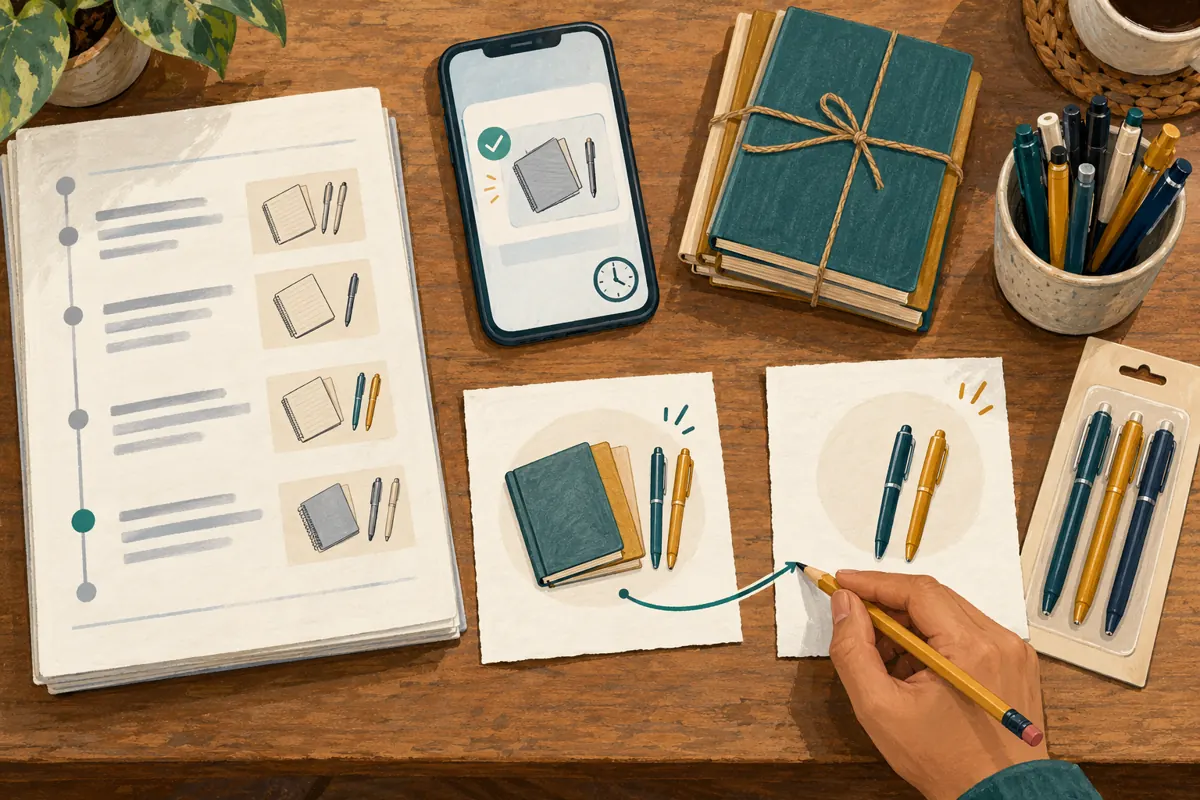
8. Keep any SMM panel activity separate from the correction
The supplied je-smm.com catalogue reference includes the exact service name “Telegram Post Views ~ From Real Account”. Its title identifies a post-view service, but no description was supplied. The wording does not establish audience location, genuine interest, delivery behaviour or whether anyone will read a revised caption. Treat the real-account wording as a catalogue claim, not independently verified evidence.
If a panel request already exists for the post, retain its reference alongside the correction time and the relevant post link. Check the documented options before assuming that a request can be paused, cancelled or moved. If the corrected offer receives a new post, do not assume an existing request follows it automatically. Never buy additional engagement as a substitute for explaining the mistake. Purchased engagement is not evidence of sales, advertising delivery, Cambodian users or customer understanding.
9. Assess clarity through enquiries, not a rising counter
Telegram's channel FAQ says post-view totals are approximate and include views of forwarded copies. That makes the counter unsuitable as proof that a particular customer read the clarification. Source: https://telegram.org/faq_channels
Look instead at the substance of subsequent enquiries. Are people still asking whether pens are included? Does the packing team still receive instructions based on the earlier offer? Record these observations without turning a small number of conversations into a broad performance claim. If misunderstanding continues, inspect the photograph, opening sentence and staff reply together. A repeated question may reveal unclear wording, but it does not by itself establish which version each person saw.
Where panel activity exists, label it separately in any review. Do not describe a change in the displayed counter as organic response to the correction.
10. Close the correction with a usable shop record
Keep one compact record containing the post reference, original ambiguity, approved wording, correction time, responsible staff member and outstanding customer follow-ups. Use a clear date and identify Cambodia local time when recording the change. Add the replacement post reference if applicable. This gives the next shift enough information to answer a question without reconstructing the campaign from scattered chats.
Common mistakes include making repeated small edits without preserving the earlier wording, burying an exclusion beneath promotional copy, and treating silence from a customer as agreement. Another is sharing only the corrected post with the packing team while their order notes still describe the old bundle. Close the task when the public offer, reusable replies and affected order records agree, and when any unresolved customer decisions have a named owner.
Frequently asked questions
Is an edited label enough when the bundle contents were unclear?
Usually it is not enough for a material clarification. The label signals that something changed, but the buyer still needs to know what is included. State the correction plainly in the offer and consider a separate clarification for earlier readers. Contact customers who already acted on the ambiguous version.
Should the shop delete the original post?
Decide based on whether the post can be made accurate and useful. Correcting it with a clear explanation may preserve context. If it must be removed, provide an accessible replacement and review the links your team distributes. Deleting a post does not resolve expectations already created in private quotations or saved screenshots.
What if the Edit option is unavailable?
Check that the authorised staff member is using the intended account and message. Do not delay an important clarification while investigating the interface. Publish a clearly identified correction through an available authorised route and contact affected customers directly. Avoid claiming that every message has the same editing controls or eligibility.
Can post views prove that customers saw the corrected offer?
No. A displayed total does not establish which wording a person read or whether they understood the exclusion. Purchased views provide no evidence of genuine interest or Cambodian readership. For an existing order, obtain a clear response about the expected contents and put that confirmation in the order record.
How should staff respond when a buyer shows the earlier screenshot?
Acknowledge that the earlier wording was unclear and compare it with the actual quotation or confirmation in that buyer's conversation. Explain the corrected offer without accusing the customer of misunderstanding. Have an authorised staff member resolve the discrepancy, then record the agreed contents before collection or dispatch.
Explore the current service catalogue, create an account, or ask a specific question through support tickets.
- Telegram: Edit Messages, New Mentions and More
- Telegram: Improved Videos and Much More — Last Edit Timestamps
- Telegram Channels FAQ
Prepared with AI assistance. Illustrations explain the workflow and do not represent customer results.