21/10/2026 12:09
Share the Tutorial or Allow Reuse? YouTube Licenses for Cambodian Kite Workshops

A useful kite-making tutorial can serve several purposes: answer a buyer’s assembly question, introduce a Cambodian workshop, or become material another instructor adapts. Those purposes need different decisions. Before promoting the video, decide whether you want people to watch your original upload or also reuse its footage. This guide follows a hypothetical Phnom Penh kite workshop preparing a bamboo-frame demonstration. It explains how to review the material, choose a YouTube license deliberately, and give a marketing helper clear instructions. The same workflow suits other small craft businesses whose educational videos contain valuable original work.
1. Describe the intended use before opening the settings
Start with one concrete sentence about what the video should accomplish. For the hypothetical workshop, that might be: help buyers assemble the frame supplied in our beginner kit. This points toward a clear demonstration, identifiable materials and a useful enquiry route. It does not automatically create a reason to invite other businesses to edit or redistribute the recording.
Now ask a separate question: would the workshop welcome an instructor adapting the footage into another lesson? Discuss an ordinary example, such as a training provider adding its own narration and using the result in a paid class. If the owner expected only customers sharing a link, this conversation exposes the difference before a setting creates a broader permission. Record the answer beside the final video filename so the person uploading it understands the intention.
2. Understand what the license choice actually addresses
YouTube offers the Standard YouTube license and a Creative Commons Attribution option; Standard is the default. YouTube says the Creative Commons option is appropriate only when all the content can be licensed that way. A video with a Content ID claim cannot receive that option. These are content-use conditions, not a promotion package. See YouTube’s official [license guidance](https://support.google.com/youtube/answer/2797468).
For this workflow, keep three questions on separate lines: who should watch, how will they find the video, and what reuse should be permitted? A workshop may want broad visibility while making a deliberate, narrower decision about reuse. Conversely, an educational project may actively welcome adaptation. Neither preference tells you whether the lighting is clear, the assembly instructions are complete, or a promotion method is suitable. Review those issues independently.
3. Test whether open reuse fits the workshop’s expectations
The CC BY 4.0 summary permits sharing and adaptation, including commercial use, subject to its terms. Attribution includes appropriate credit, a license link and indicating changes; it must not imply endorsement. The permissions cannot be revoked for people complying with the license. Other rights, including privacy rights, may still matter. Read the [Creative Commons summary and linked legal code](https://creativecommons.org/licenses/by/4.0/) before making that choice.
Turn this into a practical discussion rather than a checkbox exercise. Would the owner be comfortable seeing an edited lesson that omits the shop’s sales introduction? Would an adaptation by an unfamiliar craft business conflict with the owner’s expectations? These questions help identify whether open licensing matches the project. If the team wants to review every proposed adaptation individually, do not select an open license simply because its name sounds friendly or educational.
4. Inventory the ingredients inside the finished video
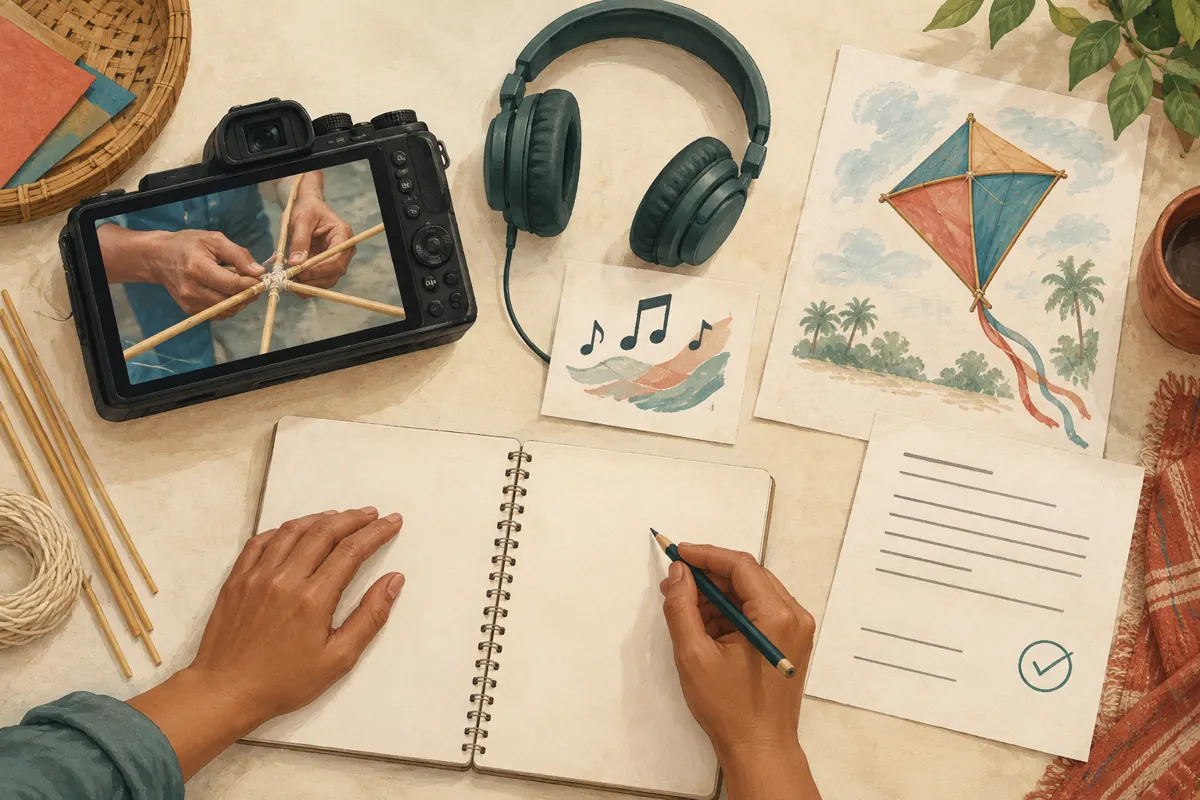
Watch the exported file and list its ingredients: footage, narration, background audio, drawings, photographs and any inserted clips. For each item, record who supplied it and where the relevant permission or license information is kept. A simple notebook is sufficient if another colleague can follow it. Review the actual export, because an editor may have added an opening image or music after the filming discussion.
In the hypothetical workshop, the owner filmed the frame assembly, a helper recorded the narration, and a supplier provided a decorative pattern image. The team should not treat these as one undifferentiated asset. Ask the supplier what uses are permitted and check the helper’s agreed contribution. If an ingredient remains unclear, remove it, replace it with suitable original material, or resolve the permission before choosing broader reuse terms. A rushed upload should not become the reason to guess.
5. Make a reusable teaching edition when it serves a purpose
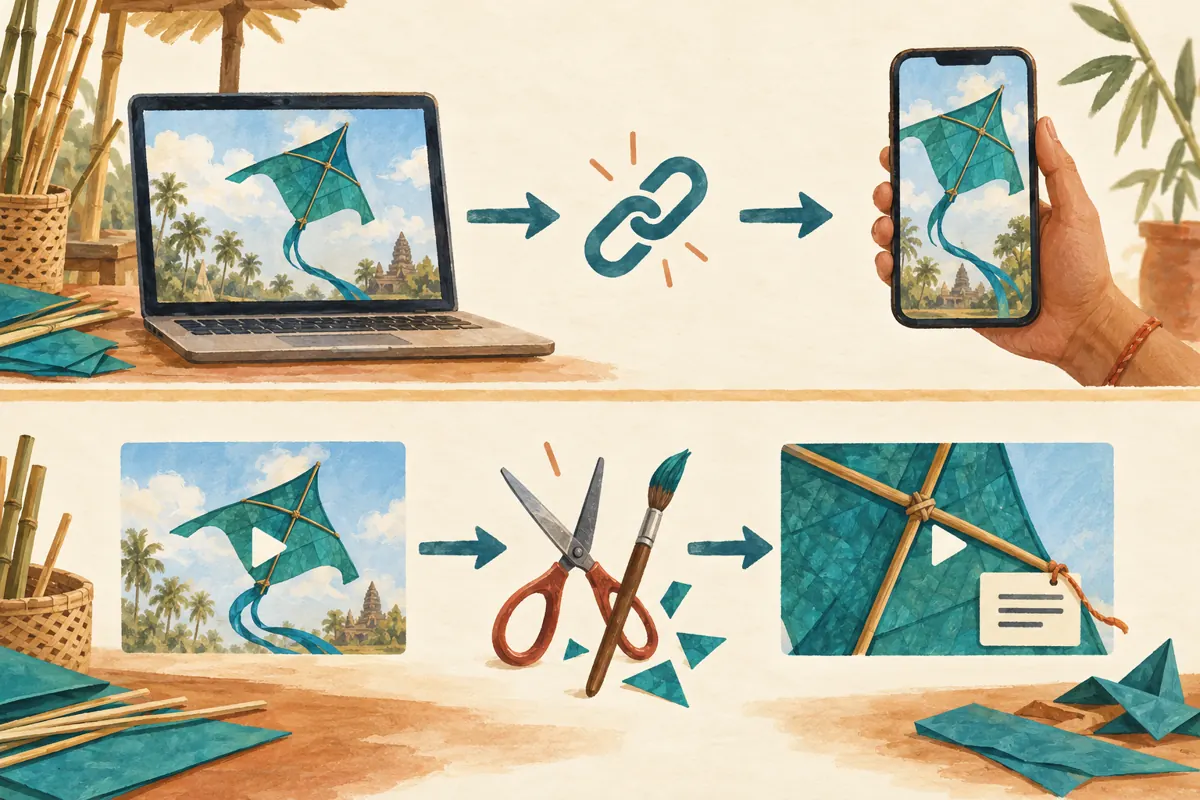
Sometimes the cleanest editorial choice is to prepare two genuinely different videos. The workshop might have a customer-facing demonstration containing its current kit offer, and a separate teaching edition focused only on tying the frame. This is a production decision, not a requirement. It is useful when the owner wants a reusable educational resource without mixing it with temporary sales information.
For the teaching edition, film a neutral opening, show the materials clearly and remove details that will quickly become outdated. Keep the source project and export distinguishable from the commercial demonstration. Give each version a descriptive internal name and its own review note. Do not duplicate the same upload merely to create more promotional targets. Each edition should answer a different viewer need, and the team should be able to explain that difference in one sentence.
6. Apply the decision to the correct upload
On a computer, YouTube’s documented route for an existing upload is Studio, Content, the video’s title or thumbnail, then Show more on the Details page. The License dropdown is there. Check the selected video against your approved export before changing it. Save the settings and reopen the details to verify your work. YouTube documents the general editing and saving process in [Edit video settings](https://support.google.com/youtube/answer/57404).
For the hypothetical workshop, the uploader should compare the opening frame and tutorial subject, not rely on two similar filenames. Record the video URL, selected license, review date and approving colleague. This small record is particularly helpful when one person films, another uploads and a third handles promotion. Give the marketing helper the approved public destination and the intended use; account credentials are unnecessary for that handoff.
7. Prepare credit information that travels with the lesson
If reuse is intentional, make accurate credit information easy to find. Keep the creator’s preferred name, work title, original source URL and exact license reference together. If the workshop is adapting someone else’s material, also document its changes and follow the applicable terms. Treat the credit block as part of the finished resource rather than a note someone will reconstruct later.
For a hypothetical Khmer-language lesson with an English internal project name, use the public title consistently so a viewer can match the credit to the original. Ask a colleague to open the source URL and identify the correct work. Avoid an attribution that points only to a general homepage when the specific source is available. Keep this check separate from the sales copy: a useful booking invitation does not replace accurate information about the material.
8. Keep the SMM-panel decision separate from licensing
The supplied je-smm.com catalogue includes the exact listing “YouTube Like ~ Max 200k ~ 100k/days ~ Instant ~ 𝐍𝐎 𝗥𝗘𝗙𝗜𝗟𝗟”. Its name presents it as a YouTube likes service, but the brief supplies no description. Treat the other wording as catalogue claims, not verified delivery evidence. Nothing supplied establishes a Cambodian audience, genuine interest or a suitable promotion method for this tutorial.
YouTube prohibits artificially increasing engagement and says a hired promoter’s actions can affect the channel. Check the actual method against its [fake engagement policy](https://support.google.com/youtube/answer/3399767); do not proceed with artificial metric inflation. A reuse license does not authorize a promotion method. Purchased engagement is not evidence of genuine interest, sales, advertising delivery or Cambodian users. For this workshop, sharing the useful original link with relevant, consenting contacts can support the teaching purpose without treating a count as customer demand.
9. Give the promoter a practical, bounded brief
Write a short handoff containing the approved URL, the tutorial’s purpose, the intended audience and the permitted task. For example, the hypothetical workshop could ask a helper to draft an introduction for its own social page explaining which kit the lesson demonstrates. Specify whether the task is sharing the original link or preparing a separately approved adaptation. The word promote alone leaves too much unresolved.
Include the questions the workshop wants to learn from readers. Are viewers unsure which bamboo pieces cross first? Do they need a close-up of the binding? Are they asking whether the kit includes paper? Record these actual questions without turning them into invented demand figures. Assign someone to answer them and update the teaching plan. Promotion becomes more useful when the workshop can respond to the confusion that its own demonstration reveals.
10. Catch the mistakes that create avoidable rework
A common mistake is reviewing only the camera footage while overlooking an added song or illustration. Another is letting a helper choose the license without discussing the owner’s expectations. A third is assuming that an educational subject makes every ingredient suitable for open reuse. Catch these problems with a final watch-through and an explicit decision recorded against the exact export.
Also avoid promising that a license selection will improve rankings, prevent copying or produce orders. None is an appropriate success test for this workflow. Instead, check whether the selected setting matches the documented intention, whether the asset record is complete, and whether the promotional brief names the correct video. If an error is discovered later, record what changed and inform the people handling the video. Do not assume a later setting change settles every earlier reuse.

Frequently asked questions
Should every craft tutorial use Creative Commons?
No. Choose according to the workshop’s intended reuse and the material it can properly license. A clear educational video can still serve customers without an open-license strategy. Make the decision at the project level: a reusable training resource and a demonstration of a current product offer may have different purposes.
What if the owner and uploader disagree about reuse?
Pause the license change and document the specific disagreement. Ask each person to describe an acceptable adaptation and an unacceptable one. This often reveals whether the concern is commercial reuse, missing context or third-party material. Resolve the intended permission before asking the uploader to implement it.
Can a supplier’s image stay in the tutorial?
Check the supplier’s actual permission and how it applies to the planned release. Receiving an image for a sales conversation is not a complete record of the intended video use. Ask a focused question identifying the image, the video and the proposed reuse. Replace the image if the needed permission remains uncertain.
Does choosing Standard solve a copyright problem?
Do not use a license selection as a substitute for checking the underlying material. If the workshop cannot establish permission for a song, photograph or inserted clip, address that ingredient directly. Keep the video on hold while the team replaces it or obtains the information needed to make a sound decision.
How should a small workshop judge whether this preparation helped?
Look for practical outcomes: the uploader selected the intended setting, the promoter shared the right destination, and viewers received a lesson the team can explain and maintain. Track actual assembly questions and confirmed enquiries in their own records. A licensing decision or purchased engagement should never be reported as proof of customer interest.
Explore the current service catalogue, create an account, or ask a specific question through support tickets.
- YouTube Help: License types on YouTube
- Creative Commons: Attribution 4.0 International
- YouTube Help: Edit video settings
- YouTube Help: Fake engagement policy
Prepared with AI assistance. Illustrations explain the workflow and do not represent customer results.