19/10/2026 06:14
From Instagram Enquiry to Bicycle Inspection: A Reply-Template Workflow for Cambodian Shops

A bicycle workshop can publish a useful Instagram demonstration and still lose an enquiry in the conversation that follows. Someone asks about a noise, the receptionist requests a photograph, and another employee promises a repair before anyone has inspected the bicycle. Reusable replies can make that exchange clearer, provided a person checks each answer before sending it. This workflow helps Cambodian shops turn an Instagram enquiry into an appropriate inspection visit. It also gives SMM panel customers a practical decision point: identify what prevents a customer from taking the next step before spending money on visible engagement.
1. Define the outcome as an inspection decision
Start with a narrow objective: help the customer understand whether the workshop can assess their bicycle and what happens next. A message exchange does not establish the fault, confirm replacement parts or authorize repair work. Your reply should move the conversation toward a decision the shop can actually support, such as arranging an inspection or explaining that the requested work falls outside its services.
Consider a hypothetical Battambang workshop promoting a short video about checking bicycles before everyday journeys. A viewer writes, “Mine makes a clicking sound. How much?” The useful response is not a copied price or a request to follow the account. It acknowledges the question, asks when the sound occurs and explains that an inspection is needed before confirming the work. This example illustrates a workflow, not an actual customer result.
2. Build a small library of replies with clear purposes
Create five short templates: first enquiry, missing detail, inspection explanation, proposed visit and confirmed visit. Keep them in a staff-accessible document without customer information. This method works through manual copying and editing; it does not depend on a particular Instagram menu or automation feature. Give each template a descriptive internal name so employees can choose by purpose instead of guessing which saved paragraph sounds appropriate.
Separate stable wording from facts that need checking. The inspection explanation may remain consistent, while opening hours, technician availability and parts information can change. Use conspicuous placeholders such as [confirmed date] in drafts, then remove every placeholder before sending. Assign one employee to maintain the approved wording. A template should reduce repeated typing while leaving the employee responsible for understanding the question and checking the answer.
3. Make the first question easy to answer
Ask for the minimum information needed to choose the next reply. Begin with the bicycle type and the customer's own description of the problem. Avoid a long questionnaire about components that the rider may not recognize. If their first message already contains useful details, acknowledge those details and ask only for what is missing.
A hypothetical first-enquiry template could read: “Thanks for contacting us. What type of bicycle do you have, and when do you notice the problem? A short description is enough to begin. We will explain the next step after reviewing it.” For Cambodian customers, prepare staff-reviewed Khmer and English versions according to the languages your team can support. Keep model names unchanged when necessary, but use ordinary language around them. Do not infer language preference from a person's name or profile photograph.
4. Request photographs only when they answer a question
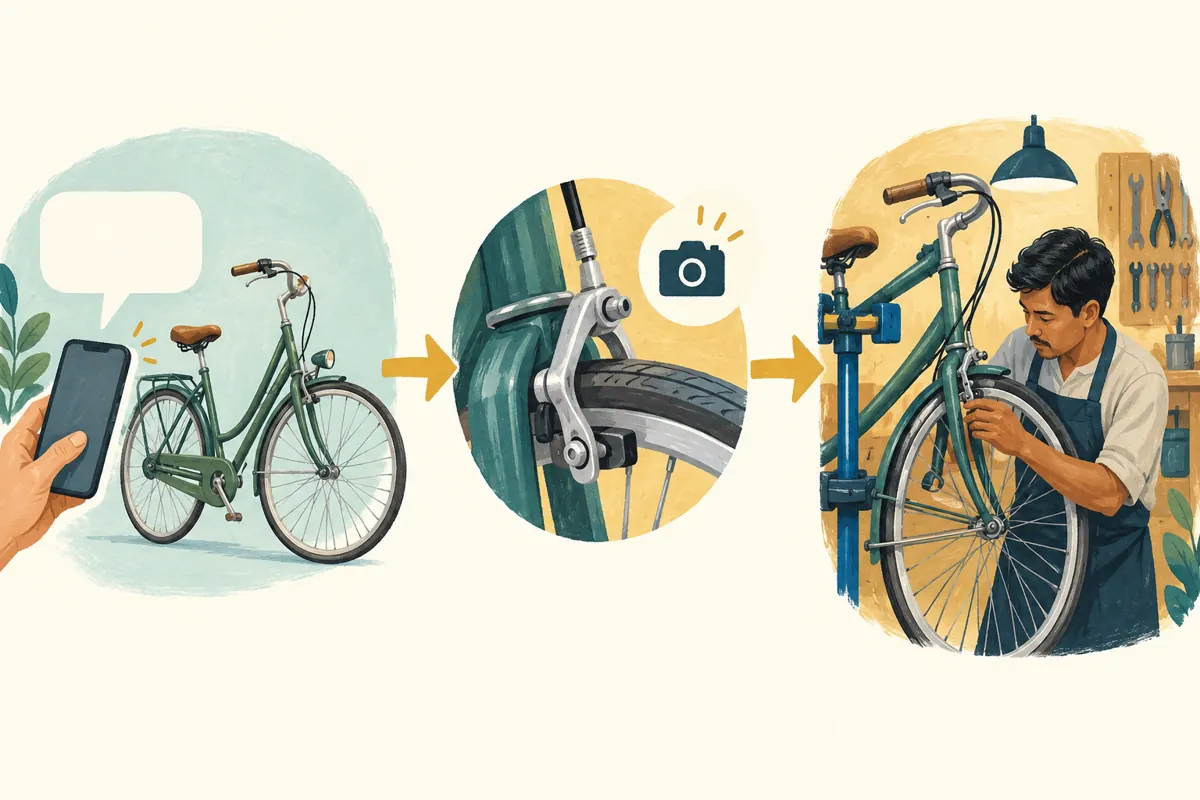
A photograph should resolve a specific uncertainty, such as identifying the bicycle or showing which component the customer means. Explain the useful view rather than saying “send more pictures.” Ask for the relevant area with the bicycle stationary, and avoid requesting faces, home addresses or unrelated documents. If a picture cannot establish the cause of a problem, say so plainly.
Account for the messaging sequence. Meta's official explanation of Instagram messaging protections says message requests to people who are not already connected are limited to text until the recipient accepts the chat. Therefore, let a new customer begin with a written description and review legitimate requests before expecting media. Do not treat an absent photograph as refusal to cooperate. Once the conversation permits it, request one relevant image rather than making the customer produce a complete visual inspection.
5. Keep estimates, diagnosis and authorization separate
Prepare a reply that explains the boundary without sounding evasive: “The photograph helps us identify the area you mean, but we need to inspect the bicycle before confirming the cause and repair price. We will explain the proposed work and ask for your agreement before proceeding.” Use that wording only if it accurately describes the workshop's process.
If the shop charges for inspection, state the actual charge and its conditions before the customer commits to a visit. If discussing a possible repair estimate, specify the currency, what is included and what remains uncertain. Never insert an invented starting price simply to make the message feel complete. A question about a clicking noise should not automatically receive a replacement-part quotation, and acceptance of an appointment should not be treated as consent to every repair the mechanic later recommends.
6. Confirm a visit without promising completion
Offer a visit time only after checking the workshop's real capacity. Distinguish an available inspection slot from an expected repair completion time. A technician may need to examine the bicycle, discuss options and check parts before making a completion estimate. Templates that promise “ready today” are especially easy to misuse when several employees share responsibility for enquiries.
A hypothetical proposed-visit reply could say: “We can offer an inspection on [confirmed date] at [confirmed time]. This is an inspection appointment; completion depends on the findings and your approval. Would that time suit you?” After the customer agrees, send the confirmed date, Cambodia local time, shop location and any relevant arrival instructions. Include a recognizable nearby landmark only if it is accurate. Check holiday opening arrangements rather than assuming the usual schedule applies.
7. Review every reply before sending
Use three checks: does the reply answer this person's question, are its facts current, and does it promise only what the shop can deliver? Read the preceding messages first. A customer who has already supplied the bicycle type should not receive another request for it. A customer asking about inspection fees needs that answer before receiving directions.
Common mistakes include leaving placeholders in messages, copying another customer's appointment details and replying in a language the recipient has not chosen. Another is sending the entire template library as one long message. Send the next useful answer, then let the customer respond. If the question requires a mechanic's judgment, acknowledge it and obtain that judgment rather than disguising uncertainty with confident wording. Templates are most useful when they make human review easier, not when they encourage automatic answers.

8. Decide whether an SMM service addresses the actual problem
Before considering a panel purchase, describe the obstacle in one sentence. If people ask about repairs but receive unclear replies, the obstacle is the enquiry process. More visible engagement does not fix it. If customers cannot tell which bicycles the shop handles, improve the promotional content. If inspection slots are unavailable, change the invitation so it reflects capacity.
The brief lists “Instagram - Likes ~ 𝗢𝗹𝗱 𝗔𝗰𝗰𝗼𝘂𝗻𝘁 ~ Max 5M ~ 100k/Days ~ Instant ~ 𝗥𝗘𝗙𝗜𝗟𝗟 30D”. Its title identifies it as a likes offering; the supplied description is empty. The title alone does not verify account characteristics, speed, limits or refill conditions. It provides no evidence that the service will generate Cambodian repair enquiries.
Purchased engagement is not evidence of genuine interest, sales, ad delivery or Cambodian users. Meta has publicly described enforcement against services selling artificial Instagram likes and followers. That documented risk belongs in the purchasing decision. For an inspection-enquiry objective, prioritize useful demonstrations and a functioning response process; do not purchase engagement to present the shop as more trusted or locally popular.
9. Test the conversation before promoting it
Run a hypothetical rehearsal with a colleague using three enquiries: a vague symptom, a request for an exact price and a customer who cannot attend the offered time. Check whether each route ends with a clear next action. The rehearsal should expose missing decisions, such as who approves an inspection charge explanation or who checks the appointment book.
Then align one Instagram post with that process. A demonstration might invite viewers to message the bicycle type and describe the issue, while explaining that repair quotations require inspection. Avoid asking for details the team never uses. Test the wording on the phone employees actually use, including the Khmer version if applicable. If a colleague cannot tell whether a proposed time is confirmed, revise the reply before directing customers into the conversation.
10. Learn from unresolved enquiries without inventing results
Review where conversations stop: before the bicycle is identified, after inspection terms are explained or while a visit time is being arranged. These stages suggest different improvements. Repeated confusion about fees calls for clearer fee wording. Difficulty agreeing on a time may call for different availability information. Neither observation establishes that the Instagram post reached the wrong audience.
Keep only the operational notes the team needs, such as the unresolved question and next action. Distinguish proposed visits, confirmed appointments, actual arrivals and approved repair work. A friendly message is not a booking, and a booking is not a completed sale. When discussing promotion, avoid attributing an appointment to a panel order merely because it happened afterward. Use customer-provided information and actual shop records, and leave the source unknown when the evidence does not establish it.

Frequently asked questions
Do we need Instagram automation to use these templates?
No. An approved document and careful manual copying are enough for this workflow. Keep each template short, edit it for the current question and review it before sending. Consider additional tools only after the team understands the decisions involved. A tool cannot determine inspection capacity or authorize a repair on the workshop's behalf.
What should we do when someone asks only for a price?
Acknowledge the price question directly. Explain which details are needed and whether inspection carries a charge. If the shop has a genuinely fixed service price that applies, state its scope and currency accurately. Otherwise, explain why the fault must be assessed before a repair quotation can be confirmed.
Should we follow up if a customer stops replying?
Use restraint and stay within the enquiry they initiated. If a follow-up is appropriate, make it relevant, such as checking whether they still want a proposed appointment. Do not turn an unanswered repair question into repeated promotional messages. If the customer declines or asks you to stop, respect that immediately.
Can a customer's repair photograph become promotional content?
Receiving a photograph to assess an enquiry does not establish permission to publish it. Seek specific permission for promotional use and explain what would appear. Remove identifying details where appropriate. An original demonstration using a shop-owned bicycle may be simpler than repurposing private customer material.
Would buying likes make customers more likely to book?
The supplied service information does not establish that outcome. Likes do not demonstrate repair needs, local residence or willingness to visit. Artificial engagement also carries platform-policy risk. Improve the clarity of the invitation, inspection terms and replies, then assess actual customer actions without claiming that visible counts prove trust.
Explore the current service catalogue, create an account, or ask a specific question through support tickets.
- Meta: Introducing Stricter Message Settings for Teens on Instagram and Facebook
- Meta: Taking Action Against Fake Engagement and Ad Scams
Prepared with AI assistance. Illustrations explain the workflow and do not represent customer results.